
Our Craft

Our PHilosophy
Natural & Local
At Hewn, bread begins long before it reaches our ovens. We bake the way bread has been made for centuries. Every loaf is hand-shaped and naturally fermented without commercial yeast, preservatives, conditioners, or additives. Just flour, water, salt, and time. Our sourdough starter, created by Ellen years ago, is fed and maintained daily. It is living, and it guides everything we do. We do not rush it. We cannot rush it.


The Sourdough
Every loaf starts with our sourdough starter, also known as levain. Combined with stone-milled grains, it allows the dough to ferment slowly, developing complex flavor while giving the gluten time to break down naturally.

Our Starter
Our starter was first created by Ellen years ago and has been cared for ever since. It’s fed and maintained daily by our bakers, and it’s at the heart of every bread we make.

The Daily Bake
Each day, our bakers mix the dough and turn it by hand every 30 minutes over four hours. The dough is shaped and placed in bannetons to rest overnight. In the morning, the ovens are fired and the bread is baked. From first mix to finished loaf, each bread ferments for about 20 hours.
THe Process
The Grain Matters
What makes Hewn different starts with the grain. We use organic, stone-milled flours sourced primarily from Illinois and Wisconsin. Stone milling keeps the whole grain intact, including the bran and germ, where flavor and nutrients live. The flour looks different because it is different. It smells alive. It behaves differently in the mixer because it has not been stripped or bleached. That is exactly why we use it.
We bake with heritage and modern heritage grains like Turkey Red, Red Fife, Spelt, and Evanston Red. These varieties have character. They tell a story of place.


THE PARTNERSHIPS
The Farmers Behind the Grains & Flour
We work directly with farmers who are as committed to the land as we are to baking.
Janie’s Farm and Mill grows certified organic grains in east central Illinois. Through crop rotation and cover cropping, they restore soil health, improve water absorption, reduce erosion, and sequester carbon. Their work supports rural communities and offers an alternative to conventional commodity farming. What they grow is milled gently at cool temperatures, preserving nutrients and flavor. Healthy soil produces healthy grain. Healthy grain produces better bread.
Meadows Lark Farm and Mill provides freshly milled flour that retains much of the bran and germ. Their bolted flour, a lightly sifted flour, keeps more flavor and nutrition than conventional white flour. Their whole wheat flour contains nearly the entire grain. Because it is freshly milled and minimally processed, it asks a little more of the baker and gives much more in return.
Hazzard Free Farm grows heirloom and open-pollinated grains without treated or GMO seeds and without chemical pesticides or herbicides. Their grains are stone milled to avoid the high heat of industrial systems that can dull flavor and alter nutrients. They are deeply committed to adapting ancient grains to local soil over time, investing in ecological health for the long term.
We also partner with Kilgus Farmstead, a multi-generational Illinois dairy that pasture-raises Jersey cows and bottles its own milk, and Mick Klüg Farms, a family-run fruit and vegetable farm supplying Chicago markets for decades. These are real relationships. We know the people who grow our food.
Why We Do Not Offer Gluten Free
Long Fermentation. Honest Bread.
We focus on doing one thing well. Our bakery is built around wheat and natural fermentation. We do not add gluten. We do not use fast-acting yeasts or dough conditioners. The long fermentation process allows gluten proteins to break down naturally over time while building complex flavor. While we are not a gluten-free bakery, many guests with gluten sensitivity find they can enjoy our breads because of the way they are made.
THe HEWN WAy
More Than a Method
In a world of shortcuts and scale, we choose patience and partnership.
Our craft is not just about shaping dough. It is about supporting farmers who restore soil. It is about choosing grains with history and flavor. It is about keeping food transparent and close to home.
We believe great baking is an act of stewardship. From field to mill to oven, every step matters. This is our craft.

OUR BREAD IS UNIQUE
Bread Care
1.
Caring for Your Bread
Once the loaf is cut into it will keep up to 4 days on your counter. Do not store the bread in the refrigerator. It is best left on the counter and wrapped in paper or a linen towel. Or, loosely wrap the cut end with plastic if you purchased it whole. If you want to be “French,” store the bread cut side down on a cutting board letting the crust be exposed to the air.
If however, you prefer a softer crust, the bread can be wrapped loosely in a recycled plastic bag and will keep for up to 4 days. Our bread does not have any artificial preservatives.
2.
Freezing Bread
If you purchased a sliced loaf, we suggest freezing the slices you will not be consuming within 3 days. We won’t think less of you if you are unable to eat the whole loaf at one sitting! We would rather you freeze it than waste it. We prefer to slice the bread before freezing that way we can pull out a piece at a time to reheat. Or, you can cut the bread in half or quarters and freeze. To prevent freezer burn we recommend you wrap the bread with foil first, then store in a freezer safe plastic bag.
3.
Saving an Uncut Loaf to Serve Later
If you plan to serve the bread the next day keep it wrapped in the paper. The next day the loaf can be warmed up in the oven. Preheat the oven to 375 and place on a rack in the middle of the oven for 6-7 minutes.
4.
Thawing
If you sliced the bread you can take a piece out and toast it right away. Or, for a whole, half or quarter loaf unwrap the bread from the foil and sit on the counter to defrost. Preheat the oven to 375. When the oven is at temp, rewrap the bread in the saved piece of foil. Place the bread (wrapped in foil) in the oven for 9-12 minutes. The foil will help steam the bread. Do not refreeze any leftovers.
5.
Wrap It
We sell Bees Wrap bread wrap at the store, which will keep your bread fresh for several days. We are proud to support this woman owned business.

BUSINESSES WE ARE PROUD TO WORK WITH
Hewn in the Community


Visit US
We’re Local
Looking for lunch, a quick coffee break or simply enjoy the smell of freshly baked bread.

Evanston
Libertyville
Winnetka
Hewn News
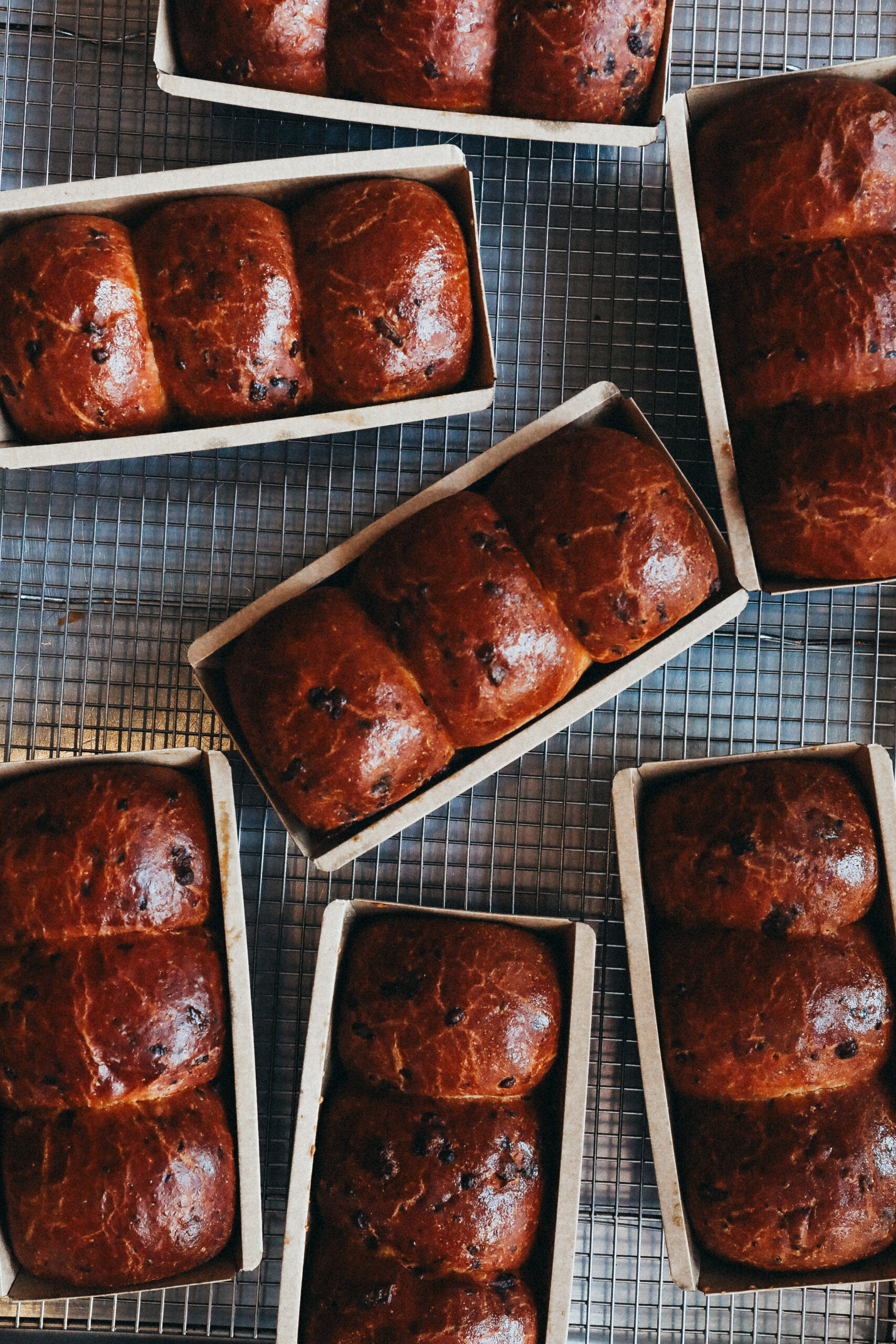
St. Patrick’s Day
March 10, 2026 | Newsletter Order Deadline is this Thursday at 8pm! Don’t forget to place your pre-order by 8:00 PM on…
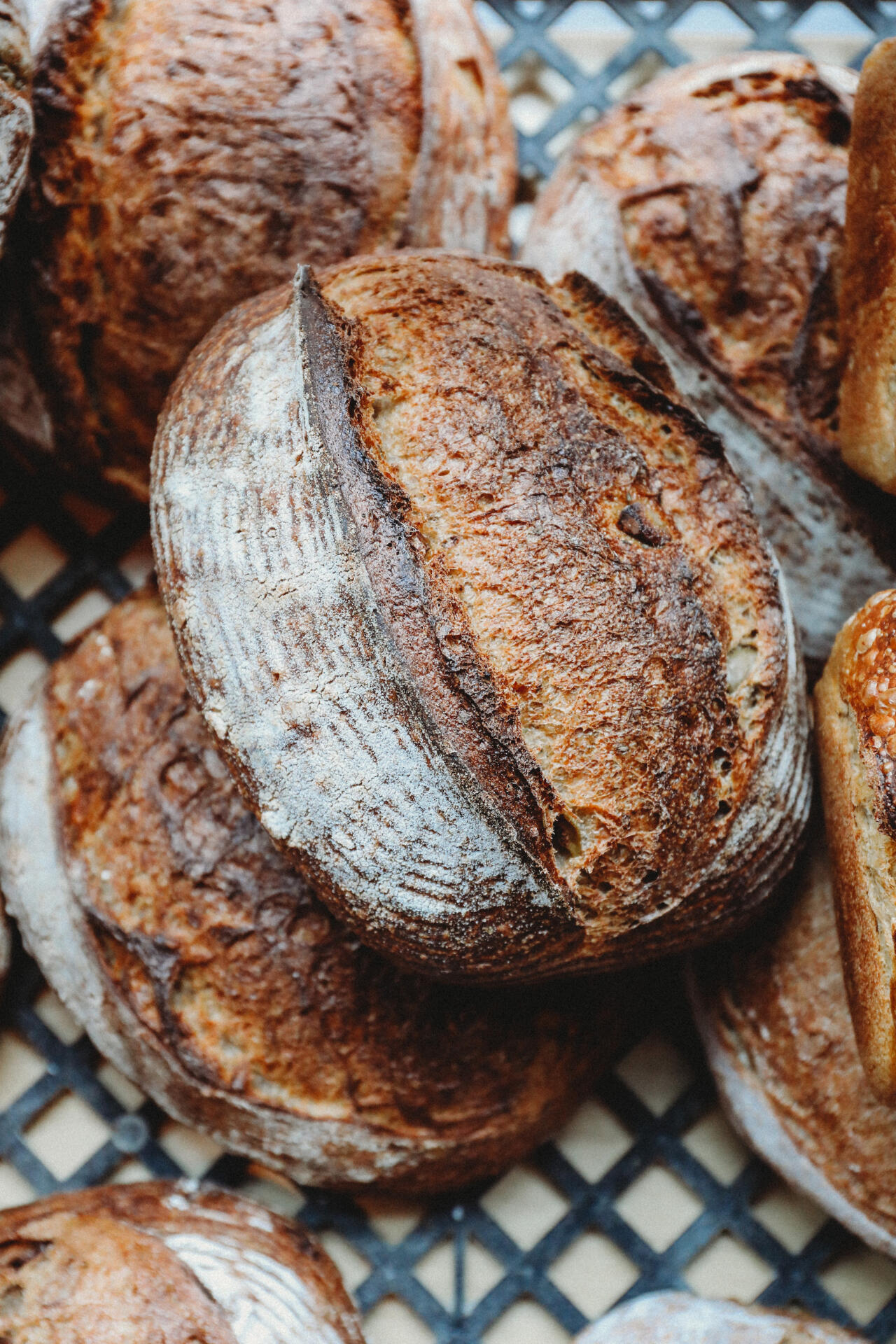
Hewn Included in Food & Wine Magazine’s List of The Best Bread in Every State
American bread-baking is the best its ever been. By David Landsel Read more at Food and Wine
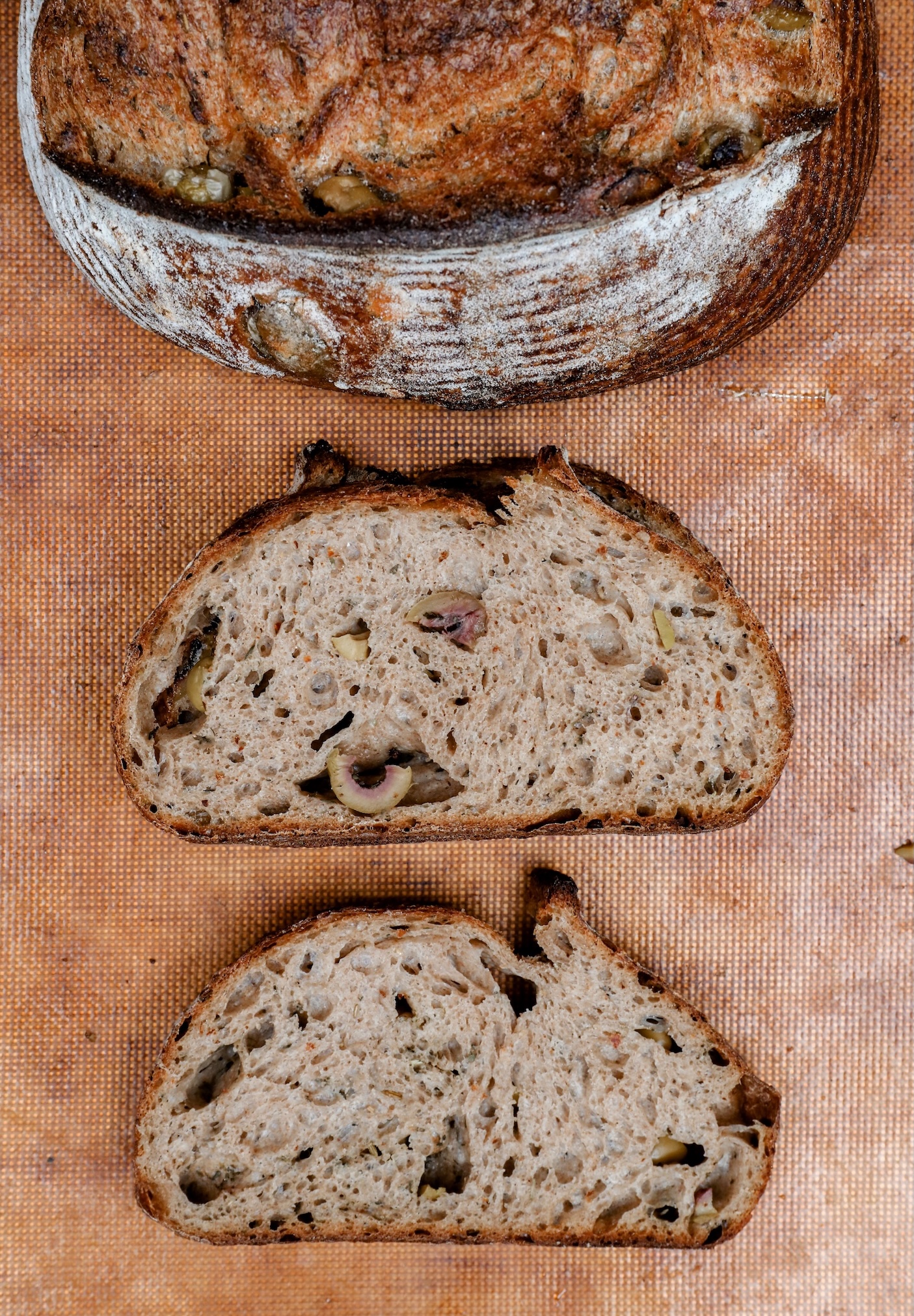
Hewn Listed as One of the 100 Best Bakeries in America by Food & Wine Magazine
“While life for many has been put on pause, bakers have baked on — most of the places on this list are open for…